Project
BOFUM
One ball, one maze, two players — and neither of them can do it alone.
Overview
A two-player labyrinth built on a deliberate split: the player in the headset can see the maze and cannot move it, and the player holding the board can tilt the whole world but cannot see any of it. Getting the ball through tight passages, drops and dead ends is therefore a conversation rather than a skill — the design makes talking to each other the only available mechanic. The controller is handmade from foam board, felt and duct tape around an Arduino, and the useful thing we learned is that incomplete information invites creativity rather than frustration, provided the maze is tuned so communication is necessary but not punishing. Made with a team of five at MIT Reality Hack 2026.
Next
 Case study
Recollection
A wedding recorded from every direction, so nobody is stuck with one person’s edit of it.
Inhabiting Memory
A family museum you enter on foot — built from interviews, tested against flat photographs.
 Case study
Spark
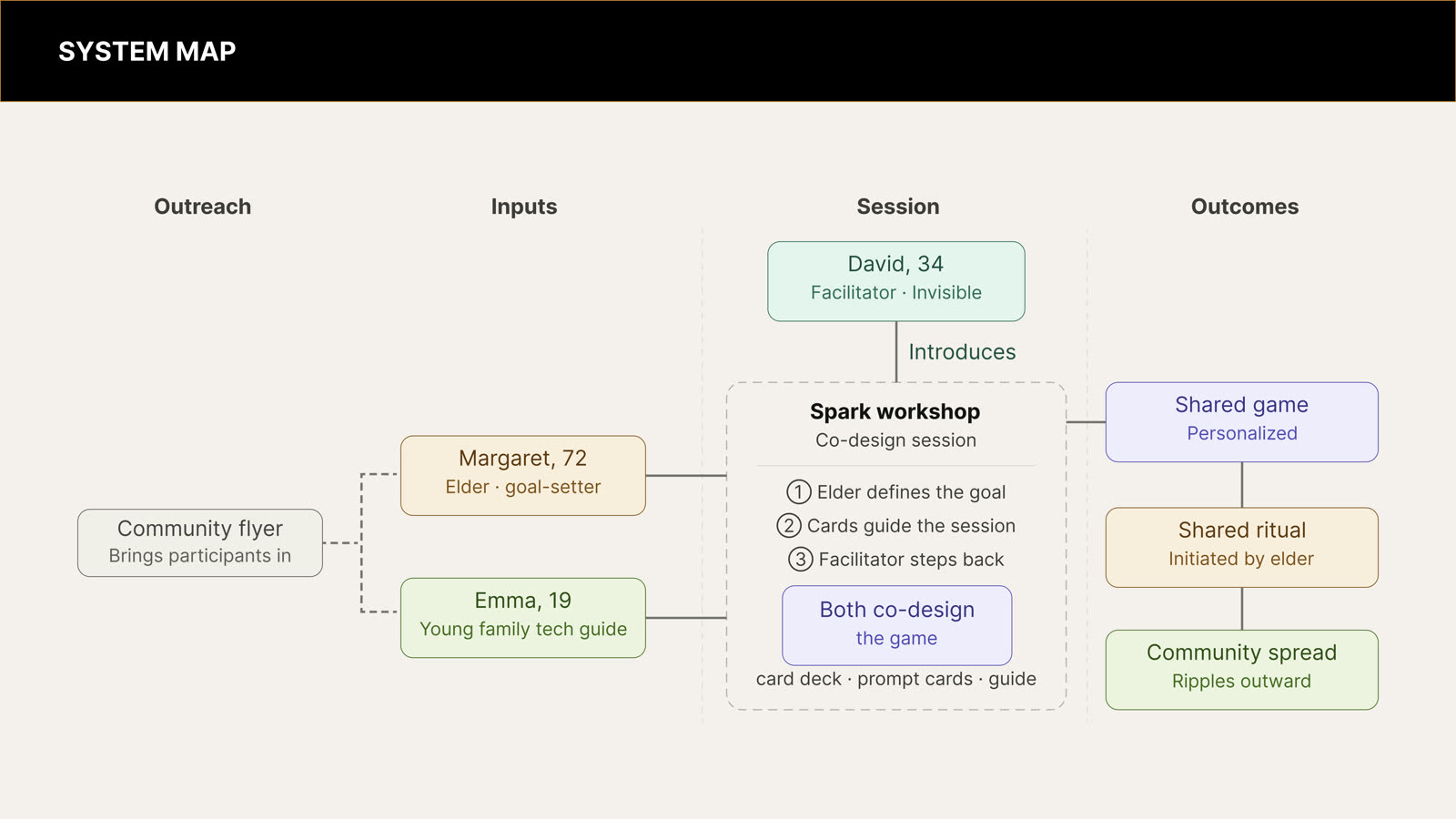
A card game an older adult designs the rules for, and their grandchild has to follow.
Buddy Run
A running coach that guides by rhythm instead of telling you to speed up.